Tag: society

  • Bulgaria’s inferiority complex?

    I’m sure I’ll offend someone with this; good. This needs to be said and people have to start becoming aware of this. The following is possibly the biggest hurdle for the Bulgarian people and it needs to be discussed.

    A few months ago I was on Bulgarian English-language news website Novinite.net, where I often got into discussions with other readers through their commenting system. One day one of the people argued that foreigners that come to live in Bulgaria must be the lowest of the low in their country. Why else would someone move to Bulgaria? Most of the commenters on the newsportal are Bulgarians that have moved abroad, mostly the USA. They are very hateful and find reason to despise just about everything. They point: the corruption is the fault of them, they hate parties on both sides of the political spectrum, except for the extreme right-wing party Ataka. It’s like they’re reading the news just to get an affirmation that their move abroad was a good choice. These people are among the most negative Bulgarians I’ve come across and  they mask their own insecurity and feelings of inferiority by pointing, pointing and pointing.

    Many people I meet have trouble understanding why someone from Holland would ever move to a country like this (twice!) and even bother to pick up a few words and sentences. To me, Holland is organized, linear, and everyone stays in their own bubble. To some that might sound appealing, but to me that sounds boring – and on top of that, the weather’s always shit. I went to Bulgaria to taste a little more of life. The food is better and more authentic, the people are not emotionless robots when they’re working, and they worry a bit less about their time. Whereas in Holland people look up the exact times of the bus and try to be at the busstop the minute before the bus comes, here people are more likely to simply go to the busstop and wait. That’s what I like, that’s why I’m here.

    But why I really believe there’s some type of underlying inferiority complex in the Bulgarian society is the expressions of powerlessness people give. They feel their vote won’t change a thing, they feel it doesn’t matter who they vote for, they feel corruption can’t be solved….. They feel completely powerless to change anything about Bulgaria. That’s why I believe this is a more important thing to handle than fixing corruption, the justice system, or anything else. People have to believe they can make a difference; and then they will. The state of Bulgaria is improving, but slowly and with a determination to make a difference, from person to person, this process could speed up ten-fold.

    People need to stop pointing at politicians, politicians need to stop pointing at each other, companies should stop pointing at politicians and politicians should stop pointing at companies. We ALL live in this country and we ALL want to have the best we can get; every time you point a finger, you can also pick up some of the litter on the streets and make a real difference.

    Life’s not perfect people, nor will it ever be. Stop expecting to get something great, while you don’t believe other people deserve something great to happen to them. You are part of those other people, we are one society. Now stop pointing or holding out your hand and DO something. Anything at all. Make a difference today.

    BasBasBas.com is about my life abroad. I regularly write about my adventures in Istanbul, Bulgaria and travels in the region, but like to ponder about the future also. If you’d like to stay up to date, you can subscribe to my RSS feed or get email updates in your inbox. You can also follow me on Twitter.
  • Politics 2.0

    The influence of new media on current day politics

    An essay by Bas Grasmayer

    The 20th century was the age of mass media. The impact of radio during the first half of the century and that of television during the second brought politics closer to home. Starting from people grouping around the one radio in their neighbourhood, to the radio in their street, until the point that everyone had a radio in their home. The same happened for television and through these media politics entered the living room. Through sound at first, but later through moving images which became more detailed and more accurately coloured over the course of the last century.

    We’re now close to ten years into the new century. Television and radio are still important, but there is a new player in the field of mass media: the internet. This essay will look at how the internet has already influenced politics and hopes to answer, in part, the following question:

    How is the World Wide Web as a medium influencing
    politics and the government right now?

    New Media

    In the 2008 US Presidential elections, politicians were seen embracing new media. Barack Obama became microblogging service Twitter’s most followed user and YouTube set up a site called You Choose ’08 dedicated to the elections. On the latter, campaign teams posted videos hoping they would go ‘viral’, a term used to describe the phenomenon of certain content on the internet being spread out through huge networks of users, which is often initially an exponential process. Ron Paul, who was running to become the Republican presidential candidate, had so much support on the internet that TIME magazine at one point commented that due to “his  success  recruiting  supporters  through  new  social  media  channels” he was “the  new  2.0  candidate”.

    (more…)

  • Dutch Journalists Tricked by ‘Magic’ Mushroom Ban Opponents

    You would think that journalists’ intelligence and street smarts prevents them from falling for hoaxes, but recent attempts to show the insanity of the Dutch ‘magic’ mushroom ban by opponents of the ban show otherwise.

    Ridiculing the mushroom ban, a website called PaddoBestrijding.nl (Shroom Removal) has been created promoting a service that supposedly helps keep innocent people safe from the long arm of the law. PaddoBestrijding’s press release reports that home-, land- and gardenowners as well as nature preservation organisations risk prosecution over ownership of one of the 186 mushroom types banned in The Netherlands, starting the 1st of December. This could lead to sentence of up to 6 year imprisonment or a 740,000 euro fine.

    The ban is quite controversial as I’ve stated before in the following two articles:

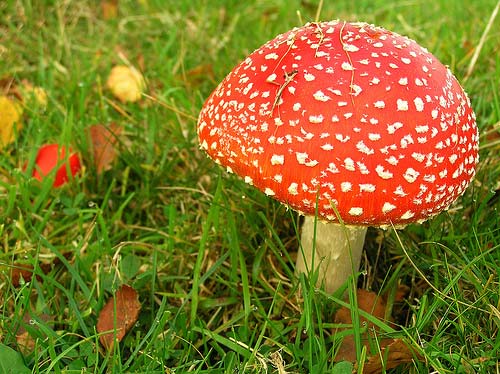
    One of the mushrooms getting banned is the Fly Agaric, or Amanita muscaria (picture below, by Roger B.), a popular mushroom in European folklore (and in Super Mario), one of our nature’s beauties, and a popular sacrament in ritual shamanic use. Looks like the Christian Democrats are still on a witchhunt, with the aid of the Labour Party.

    The Fly Agaric is one of the mushrooms illegalized in the Netherlands

    It took me a second to figure out that PaddoBestrijding was an eleborate hoax, but three sections of the site really give it away and I’m stumped that journalists didn’t get the joke. Then again, the Dutch government did try to ban the use of satire once (1, 2, 3). The pages that really give the spoof away are the methods, testimonials and shroom of the month. Some translated quotes from the various pages:

    ShroomRemoval about methods:

    “Depending on the scale of infection and the soil type, we choose for a surface-, or a depth treatment. With the latter a fungicide is sprayed into the soil under high pressure as deep as 70 cm. Thankfully this is not always necessary and most of the time a surface spray can be utilized, after which the fungi killing substances slowly seep into the soil. Modern fungicides are extremely poisonous, meaning that only a small amount has to be used; a comforting thought.

    If that last sentence doesn’t give it away, maybe one of the silly testimonials might:

    “When we could access our garden again, eight weeks after the mushroom removal, all mushrooms were gone. We were warned about dead animals, but luckily it wasn’t that bad. The plantgrowth has recovered a bit by now and every now and then we’re also seeing some birds in our garden again. In a few years we will once again be able to safely eat from our garden.”

    Hellooooo gullible journalists… you got it yet?! No? How about the mushroom of the month, where an opposition to the new mushroom ban is subcommunicated. Strange, for a company that can profit so much from this, no? Here it goes:

    “Even though the ‘orange funnel’ (Rickenella fibula) doesn’t contain psylocibin or other related tryptamines, it has still been put on the list of banned mushroom types under the aged synonym ‘gerronema fibula‘.”

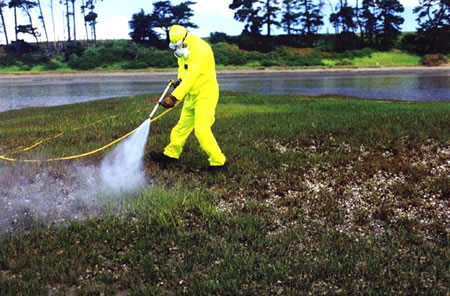
    All of this, combined with pictures of people in yellow suits and gas masks spraying toxic chemicals should raise some doubts in the mind of journalists, but nope, they fell for the hoax. An eleborate and modern version of the type of jokes Provo’s played on Dutch society, which I blogged about before.

    I must admit that as I started writing this article I wasn’t 100% sure about this being a joke. Since I don’t want to spread misinformation, I did some research, like any self-respecting journalist should. Through some very simple domain name research I found out that MushMush.nl registered PaddoBestrijding.nl. MushMush was selling magic mushroom growkits until the ban and talks about growing methods. So of course it is a hoax!

    So far ShroomRemoval has been featured in the following media:

    • Spits (Rush Hour), one of the biggest (if not the biggest) free newspapers in Holland. [web article, newspaper clipping (from the frontpage apparently)]
    • NOS Headlines on 3FM (Radio), one of Holland’s most popular radio stations. [online, direct download]
    • FunX (Radio), popular radio station for teenagers and other people with a poor taste in music. The two DJ’s spoke with a representative of PaddoBestrijding on the air and showed particularly gullible behaviour and nauseating stupidity. 😉 [direct download]

    Just shows how gullible the media is and makes one think twice about the trustworthiness of news. With one I mean me, and hopefully you too.

    BasBasBas.com is about a Dutch student living in Istanbul. I regularly write about my adventures in Istanbul and travels in the region. If you’d like to stay up to date, you can subscribe to my RSS feed or get email updates in your inbox. You can also follow me on Twitter.

  • Netherlands to ban ‘magic’ mushrooms starting December 1

    Dutch Christian Democrat minister of Public Health, Ab Klink, has announced the ban of selling and growing ‘magic mushrooms’, or shrooms, will take place on December 1. This knee-jerk reaction follows a media and political hype caused last year by the suicide of a 17-year old French tourist who was said to be under the influence of mushrooms at that time. It was also her second suicide attempt.

    Politicians got riled up as the media started covering every mushroom mishap in Amsterdam. Since nobody really stopped campaigning since the last government was formed – as they’re doomed to fail – they saw this as a good chance to speak up, speak out and win votes. At the cost of liberty and sanity.

    Ab Klink, minister of Public Health, previously asked the Coördinationpoint for the Assessment and Monitoring of new drugs (CAM) to research illegalizing shrooms. They concluded that these are the risks involving mushrooms:

    • Health of the individual: no risk.
    • Public health / society: minimal risk.
    • Public order / safety: minimal risk.
    • Criminal involvement: no risk.

    The CAM advised against a ban on mushrooms for the following reasons:

    • The smartshops selling the mushrooms might replace them by substances which carry more risk;
    • It will lead to shrooms being sold in tablet-form, like XTC pills;
    • Users would pick mushrooms in nature, which could lead to serious problems if they mistake the wrong type of mushrooms for the ones they are looking for;
    • Users might switch to other drugs, which might be more interesting from a criminal perspective and possibly carry more risk for usage… Leading to more danger to the public;
    • The banning of mushrooms is a rather tough sanction given the current problems its causing;
    • Maintaining a ban would bring costs.

    What did Ab Klink do? Ban them! Of course. The CAM was surprised as this is the first time a minister has ignored the advice of this advice organ. Minister Klink is obviously tripping. Or maybe he’d like to see the Bible as our lawbook?

    Dutch ‘smartshops’ that sell magic mushrooms and other legal mind-altering substances are taking this to court. For updates on this matter you can follow Dutch blog Red De Paddo (Save The Shroom).

    Recently a Christian Democrat politician called for the closing of all coffeeshops in Holland and illegalizing cannabis. In a follow-up poll, Dutch citizens expressed their opinions about the Dutch policy regarding drugs. 36% want coffeeshops illegalized, but 34% wants to see them completely legalized. Coffeeshops in Holland are currently in a grey area, more can be read about this in the article below or on Wikipedia. In short the sale of softdrugs is legal in Holland, but supplying coffeeshops of them is not.

    Last year I wrote about the pending mushroom ban in several articles, one of which is reposted below, the others can be found via these links:

    Stay updated. Follow my Twitter feed, or subscribe to this blog by RSS or email.

    Below a repost of my article Dutch government to ban cultural identity. (more…)

  • My Interview about Wilders

    A few weeks ago I was interviewed about my views on the Geert Wilders movie Fitna by Alex, a PR professional, journalist and blogger from Bulgaria. I have a strong opinion about this, so when he asked me, I immediately told him yes and we made it happen. It was published a while ago and now I figured it’s time for a crosspost.

    What were the first consequences of the Geert Wilders video “Fitna” in Holland?

    Well, the first consequences actually came before the film was released. For about three months, we’ve been waiting for this film, not knowing what would be in it. Given the statements Wilders had made in the past though, a lot of people were worried that it might be very offensive to Muslims and spark riots in some of the immigrant areas of our cities.

    So the main consequence was a lot of fear and a big debate about Islam and it’s position in our society and western society – and how far the freedom of speech goes.

    After the release it stayed pretty calm. I think it’s less bad than what was expected or feared for and the tension really seems to be gone now. Or in the background.

    Was it changed because of that Armageddon-expectations? And in fact this couldn’t be the main version?

    I doubt it. If those expectations had come true, Wilders could have said “Look! I was right.”

    I don’t think it was in his interest to tone his film down. I would find it hard to believe he would done that, it’s not his style.

    Do you feel kind of disappointed of the final result?

    Partly. I was expecting a well produced film, though this is cut and pasting with fragments we have all seen numerous times, probably hundreds, in the case of the 9/11 footage even thousands of times. I am happy that he didn’t go as far as others said, because that could have caused national problems as well as international problems for the Netherlands (politically as well as economically). Some countries were threatening with boycotting Dutch products for instance.

    Can you find Wilders right in any of his statements expressed in the movie?

    Yes, with regards to Islamic extremism being a problem we need to be concerned with, like any form of extremism. No, with regards to the fact that he doesn’t limit his judgment to the small group of the 1 billion Muslims that is extreme, but is generalizing all Muslims.

    Although he himself claims he doesn’t; he is talking about the Islam, not the Muslims. I think that’s just a childish point, because when speaking about a faith in this way, you automatically talk about its followers.

    You’ve lived in Bulgaria for about an year. What makes Wilders differ from Volen Siderov?

    Well, I lived there a half year, and I assume Volen Siderov is from Ataka (?), but I didn’t get enough of an impression of him or them to say anything about that. Sorry.

    I do think Bulgaria is in a very different position than Holland though. Since the Islam in Holland came through immigrants; in Bulgaria through occupation by Turkey. If I wasn’t misinformed, at least.

    Can we expect that Geert Wilders will be treated like they did to Theo van Gogh?

    Times have changed a bit and both are different. Since the politician Pim Fortuyn was assassinated, politicians have been getting a lot more security. Since Theo van Gogh, any politician that makes sensitive statements regarding Islam gets more security. Theo van Gogh didn’t have this, as far as I know.

    Geert Wilders has a secret address and has to change from residence every so often (I don’t know and I think they keep it secret for his safety). But yes, he is under threat and I’m sure that there are some crazy people who would try to get him if they just saw the chance to do it.

    It can be either Muslims who think he has insulted their faith/prophet, or people who don’t like his angry and right-wing tone (which can be extreme at times) and are concerned about the future of the Netherlands or just personally upset by him.

    http://bigtandem.wordpress.com/2008/04/03/bas-about-wilders/

Related Posts Widget for Blogs by LinkWithin