 Due to the recent case against The Pirate Bay in The Netherlands, which could render The Pirate Bay inaccessible to Dutch internet subscribers, I decided to look at ways that I could access the site if it were to get banned. Not because I want to download copyrighted material from it, but because it’s one of the best ways to distribute my DJ sets to fans. If it were to get banned, the Dutch court would sever a great distribution channel that can be (and IS) used in legal ways too.
It’s not just this case that makes me wonder, but also the fact that Dutch ISPs are required to store the surfing history of their clients for 12 months. They are required to keep a whole list of information, which can be seen at the previous link. Since I don’t trust my backwards, Christian democrat government with my data, let alone the possibility of a right-wing extremist gaining access to it after the next parliamentary elections, I decided to look into proxies.
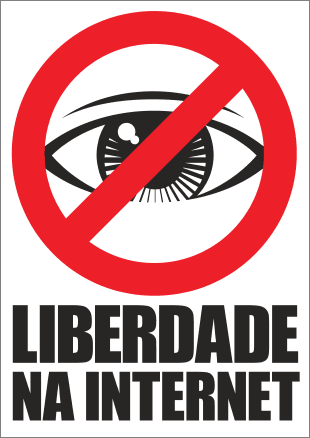
Then I realized something. Monitoring users and infringing on their privacy, but especially restricting a medium like the internet, turns users into hackers. For instance, a lot of kids are fascinated by hackers – not just because of the picture Hollywood paints of them, but also because they face a lot of restrictions on the internet. Filters on their computer or browsers at home, even worse filters at libraries or their schools, etc. So they figure out how to dodge these filters.
It’s no coincidence that in countries like Iran, or China, which have some of the most restricted internet connections in the world, there are very high amounts of hackers. This should be a warning to those trying to control the flow of information on the internet by banning sites: we, the Internet users, will become better at dodging your filters and will become even less trackable than we are now.
What this means to the content industries (movies, music) is that right now there’s a huge database of information on the use and downloading of music. If the ‘pirates’ weren’t so scared of the industries, they wouldn’t be so anonymous and the information would be even more useful for things like testing popularity of music, but also marketing music to the right people.
Another example are the recent calls in Germany to block right-wing extremist websites. The problem with this is that it will only drive this movement underground, making it harder to track them and to prevent hate crimes. They’re already getting more internet savvy. Instead of spending so much time discussing how they can censor such websites (which will NOT decrease the amount of people with right-wing extremist tendencies), maybe they should look at how they can profile different types of people that fall prey to extremist thoughts and think of ways to integrate them into society, instead of alienating them further and making them more extreme.
By blocking our access, we’re turned into hackers. We go underground. At that point, you lose your opportunity to monetize or to influence us via our favourite medium. You’re not disconnecting us from our favourite sites, you’re disconnecting yourself from us.
Image by LShave, shared under a Creative Commons license on Flickr.
If you liked this post, consider subscribing to my RSS feed (Firefox users, check out Feedly) or follow me on Twitter @Spartz.