Tag: culture

  • Bulgarian employees sick a lot, Turkish not – Work mentalities compared

    Graph of average annual sick days taken per employee around the worldResearch done by consultancy firm Mercer for The Economist has shown that out of their selected countries for research, Bulgarians take the most sick days per year.

    Have a look at the graph on the right, you can click it for a larger version.

    Coincidentally, I  don’t just live in the country with the highest number of sick days, but have also lived in the country with the lowest number of sick days taken per year; Turkey. Whereas Bulgarians take an average of 22 sick days per employee per year, Turks take just 5. This might be due to very different work mentalities.

    In Bulgaria there is a saying: “They pretend to be paying me and I pretend to be working.” As you probably know, Bulgaria is a rather poor nation (the poorest of the EU), but besides that I’ve also noticed something else in the work mentality of many people. I’ve heard a lot of expressions of powerlessness. People believe they can’t change things, things are just the way they are… This is logical, given the history of Bulgaria, which consists of 500 years of Ottoman occupation, about 40 years of freedom, followed by roughly 50 years of a communist system.

    I’m not saying everyone in Bulgaria is like this, but having worked in Bulgaria, I completely understand the above mentality… The pay for most jobs is quite low and when you try to make a difference, it’s really tough to seriously get things done. The high number of sick days could also be explained in a different way also. Since Bulgaria is a country with a very tough climate and it’s also quite poor, maybe the national health level is not so high. Who knows (research firm Mercer doesn’t).

    For Turkey it’s very different. When I started a job in a restaurant, they wanted me to spend all the time that I wasn’t in university in the restaurant. I was working from 10 in the morning until 10 in the night on Friday, Saturday and Sunday, and was working from 3 in the afternoon until 10 at night on Wednesday and Thursday. I had class from 9 to 5 on Monday and Tuesday and from 9 until 2 on Wednesday and Thursday. Every day I started early in the morning and finished late at night. It was very exhausting. This is the work mentality in Turkey though. They’re not the most effective workers, but they work a lot and they work very hard generally – even when they’re sick.

    It’s a rather dangerous thing comparing Turkey to Bulgaria, so let me add that I don’t think either of the work mentalities is better than the other. The Turkish work mentality is quite fanatical and insane, although worthy of admiration. People seem very stressed and they need a break (come on, let people take a day off when they’re sick). The Bulgarian work mentality is generally lazy and a bit powerless. Most people I know here would agree with me. Bulgarians need to be given the feeling that they can actually change something, can actually make a difference, can actually achieve something, plus they shouldn’t feel like their bosses are “pretending to be paying” them.  The Bulgarians I know that feel like this, are achieving great things and inspire me constantly. An injection of motivation would be great for the work mentality and with recent protests of farmers and students, things are looking up, because who would take to the streets when they feel powerless?

    Bulgarian protestPhoto by kozzmen

    Is your country listed? How do you think your country racks up? What’s the work mentality in your country? Does it match with your own work mentality?

    BasBasBas.com is about my life abroad. I regularly write about my adventures in Istanbul, Bulgaria and travels in the region, but like to ponder about the future also. If you’d like to stay up to date, you can subscribe to my RSS feed or get email updates in your inbox. You can also follow me on Twitter.
  • “Slowly! … Slowly!”

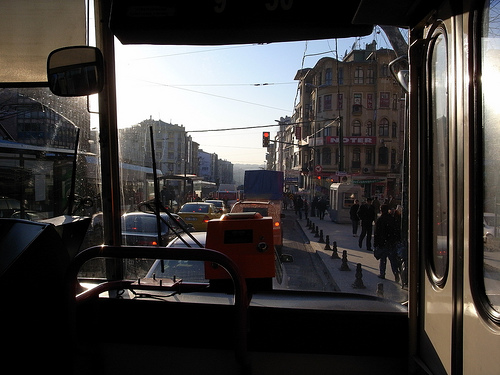
    Recently I went to an international student party here in Istanbul, but I don’t want to talk about the party. I want to talk about our way to the party. We were hanging out in an apartment on the Asian side of Istanbul, where we all live. We had dinner together, some wine and around 11 we decided to get on our way to grab a bus to the Taksim/Beyoğlu district of the European side of Istanbul; it’s where all the parties happen.

    So we got on our way and into the bus… As we were sitting in the bus, waiting for it to leave, it was noticeable that we were attracting some attention. Of course, we were all chatting and foreigners in Turkey generally attract quite a bit of attention.

    As the bus started moving, we started getting some ugly looks from people turning around and looking at us… Maybe it was not just us being foreigners, maybe we were a bit too loud (even though we weren’t loud, especially by Turkish standards).

    Then, upon one guy’s third turning around and staring at us, he said in a very direct and rather rude tone:

    “Excuse me!!!!” There was a pause.

    “Slowly!” Another pause.

    “Slowly!!” He kept staring at us.

    One of the girls present said okay and then the guy turned around to start a conversation with his neighbour. No doubt that it was about the nuisance and the suffering he had to go through, with us in this bus.

    Even though the guy was quite rude – and drunk, as was obvious upon him exiting the bus – this small anecdote says something about the culture in Turkey, or at least Istanbul. You will hardly ever see someone eating in a bus, or even on the street. When two friends get into a bus together, they usually lower their voices and speak rather softly. This is quite different from other countries I’ve visited, where people generally talk with each other in a normal volume.

    Also, a lot more so than in Holland, people will actually immediately get up for a woman, an old person or a person with disabilities. Not 100% of the times, but a lot more than in Holland. Over here I started feeling that the whole bus should be ashamed of themselves if there’s an old lady standing while there are young people sitting.

    However, all of the above does not mean that the guy yesterday wasn’t completely out of line. First of all, you’re in the bus to Taksim at 11 o’ clock on a Friday night… What do you expect? Second of all, he was eating when he got into the bus. Thirdly, he could have asked us politely at least, or just have made some gesture instead of shouting at us.

    Photo above by ibcbulk on Flickr, shared under a Creative Commons license.

    How is the bus culture in your country? How are people’s manners? Can you comment about some of the things mentioned in this article and how it is in places you’ve been to?

    BasBasBas.com is about my life as a Dutch student living in Istanbul. I regularly write about my adventures in Istanbul and travels in the region. If you’d like to stay up to date, you can subscribe to my RSS feed or get email updates in your inbox. You can also follow me on Twitter.
  • Drugs, Prostitution and Same-Sex Marriage

    That’s the title of a 10-15 minute presentation I’m giving soon for my Intercultural Communication classes at Yeditepe University, here in Istanbul. I designed it in such a way that it can also be enjoyed without my vocal explanations and here it is!

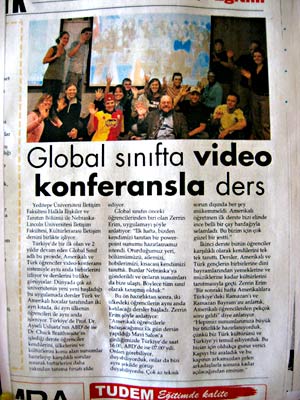
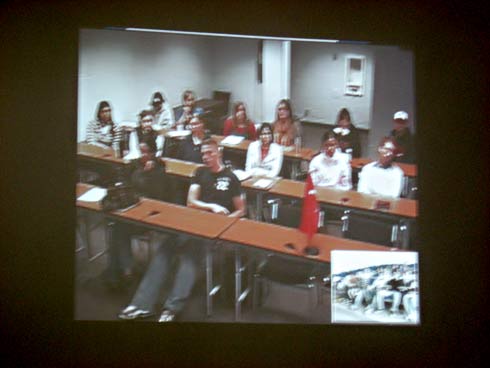
    The Intercultural Communication course is likely to be the most innovative course I’ve taken during my higher education (sadly — universities should make more use of modern technologies). Every Tuesday, we get into a classroom at 4 o’ clock in the afternoon and have a video conference with a class in Lincoln, Nebraska, US. We present ourselves, our culture, customs, daily lives and our countries to each other. It’s fascinating, because both the Turkish class as well as the American class have students from many different backgrounds.

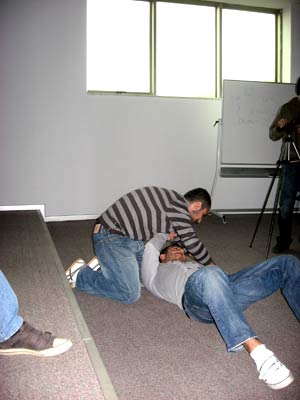
    This part of the Intercultural Communication course, called Global Classroom, has been quite fun so far. We’ve managed to make 2 students from the Nebraskan class dance in front of the camera and they’ve managed to make 2 of our students wrestle in front of the camera (or was it Jiu-Jitsu?).

    There’s only a few sessions left, so I hope I actually get to do my presentation, as our lecturer wanted everyone to prepare one, but there will be no time to actually execute all of them.

    I hope the presentation has given you an insight into Holland’s liberal policies and if you have any questions please feel free to reply. I love answering questions about these issues.

    How about in your countries, how is your government dealing with these issues? What is your personal opinion on these matters? Has the war on drugs failed? Is same-sex marriage morally wrong or is keeping it illegal a form of discrimination? What about prostitution?

  • Netherlands to ban ‘magic’ mushrooms starting December 1

    Dutch Christian Democrat minister of Public Health, Ab Klink, has announced the ban of selling and growing ‘magic mushrooms’, or shrooms, will take place on December 1. This knee-jerk reaction follows a media and political hype caused last year by the suicide of a 17-year old French tourist who was said to be under the influence of mushrooms at that time. It was also her second suicide attempt.

    Politicians got riled up as the media started covering every mushroom mishap in Amsterdam. Since nobody really stopped campaigning since the last government was formed – as they’re doomed to fail – they saw this as a good chance to speak up, speak out and win votes. At the cost of liberty and sanity.

    Ab Klink, minister of Public Health, previously asked the Coördinationpoint for the Assessment and Monitoring of new drugs (CAM) to research illegalizing shrooms. They concluded that these are the risks involving mushrooms:

    • Health of the individual: no risk.
    • Public health / society: minimal risk.
    • Public order / safety: minimal risk.
    • Criminal involvement: no risk.

    The CAM advised against a ban on mushrooms for the following reasons:

    • The smartshops selling the mushrooms might replace them by substances which carry more risk;
    • It will lead to shrooms being sold in tablet-form, like XTC pills;
    • Users would pick mushrooms in nature, which could lead to serious problems if they mistake the wrong type of mushrooms for the ones they are looking for;
    • Users might switch to other drugs, which might be more interesting from a criminal perspective and possibly carry more risk for usage… Leading to more danger to the public;
    • The banning of mushrooms is a rather tough sanction given the current problems its causing;
    • Maintaining a ban would bring costs.

    What did Ab Klink do? Ban them! Of course. The CAM was surprised as this is the first time a minister has ignored the advice of this advice organ. Minister Klink is obviously tripping. Or maybe he’d like to see the Bible as our lawbook?

    Dutch ‘smartshops’ that sell magic mushrooms and other legal mind-altering substances are taking this to court. For updates on this matter you can follow Dutch blog Red De Paddo (Save The Shroom).

    Recently a Christian Democrat politician called for the closing of all coffeeshops in Holland and illegalizing cannabis. In a follow-up poll, Dutch citizens expressed their opinions about the Dutch policy regarding drugs. 36% want coffeeshops illegalized, but 34% wants to see them completely legalized. Coffeeshops in Holland are currently in a grey area, more can be read about this in the article below or on Wikipedia. In short the sale of softdrugs is legal in Holland, but supplying coffeeshops of them is not.

    Last year I wrote about the pending mushroom ban in several articles, one of which is reposted below, the others can be found via these links:

    Stay updated. Follow my Twitter feed, or subscribe to this blog by RSS or email.

    Below a repost of my article Dutch government to ban cultural identity. (more…)

  • Republic Day Fireworks (Video)

    On the 29th of October, Turkey celebrates the foundation of its Republic in 1923 by founding father Mustafa Kemal Atatürk. This goes together with Turkish flags hanging from every window in Turkey as well as some free parties in Istanbul and some amazing fireworks above the Bosphorus.


    Click here to see the video on Vimeo

    They spent quite some money on the fireworks, as you can tell from the video. Last year the show was even bigger and they also had a lasershow showing important images from Turkey’s history. This year the show was a bit shorter allegedly due to terror alerts. Still an amazing show and I bet it keeps the Turkish people in Istanbul proud of their nation for yet another year. 😉

    It’s every year, so if you have the chance to be here around the end of October, seize the opportunity!

  • The Street Accordionist (Video)

    There’s a lot of business coming through my street here in Istanbul. Men carrying big stacks of bread on their head, men with carts with second-hand junk, women selling flowers or tissues, but we also have street accordionists… Not sure if I mentioned them before, but it’s time to dedicate an article to them, since it’s a really unique thing about living in Istanbul.

    First things first… The video! Click play. If you’re on a slow connection, like me, pause the video directly after clicking play and wait until the black bar becomes grey.

    I’ve encountered this before in my neighbourhood, but didn’t think of making a video. Last time it was a gypsy father and his son, the father playing the accordion and the son collecting the money thrown from the windows. Yes, I was following the ‘ettiquette’. You’re expected to throw the money from the window as a reward. They then stay around your corner for a little while before they walk further down the street.

    This custom of accordionists collecting money thrown from the windows might seem strange, but since a lot of business here happens in the street, as described in the first paragraph of this article, it’s completely logical. For instance, something else I’ve seen is people lowering buckets on a rope to receive vegetables from the sellers coming through the street with their carts. They then put the money in the bucket and lower it to give it to the salesman.

    Truly some romantic customs here, even though they might seem ‘uncivilized’ to some. I know a lot of people from all around the world visit this blog… My question for you is: do you have street musicians like this? Do you have customs of purchasing stuff right in your street?

    If you have anything interesting to share, please do! And remember, what might be normal, or boring for you… migth be extremely fascinating for someone living at the other side of the world… and since my readers are from all over the world, you really have no excuse not to contribute. 😉

    If you want to stay up-to-date on my blog’s updates and use a feedreader, please subscribe to my RSS feed. You can also subscribe by email.

  • Expat Experience! Edition 1 – Blog Carnival

    Expat Experience Logo

    Welcome to the first edition of blog carnival Expat Experience!

    Expat Experience is a collection of the web’s best blog posts about life as an expat around the world. What is it like to move abroad? What are the joys and difficulties of emerging yourself in a different culture? What about food, culture shock, language problems, or making friends abroad? How about maintaining contact and relationships with people back home? But let’s not forget the adventures one experiences as an expat… travelling in ones new home country, the social life, going from outsider to insider in a new environment.

    Expat Experience is a reflection of all of this and more. We all have different homes and different destinations, but share one thing… We have made the move abroad. Whether you’re a long-term or short-term expat, serial expat or just someone that’s interested in the life of expats… Whether you’re interested in the lives of expats in your home country, an expat that wants to read about the experiences of fellow expats, or you just want to network with other expats and gain some attention for your own blog… Expat Experience offers a fascinating insight into the lives of expats globally.

    Enjoy the read, enjoy the adventure! Enjoy the Expat Experience!

    (more…)

  • Crossing The Bridge – The Sound of Istanbul

    Last night I was relaxing a bit, since that’s the main reason why I came to Sofia, and I was looking for some documentaries on Istanbul. Hoping to learn about some interesting things I didn’t know yet in my current hometown, I came across a famous 2005 documentary called Crossing The Bridge – The Sound of Istanbul. It shows a lot of the music and culture that Istanbul has to offer, but also captures the daily life quite well. From rock to gypsie to Turkish traditional to rap to the whirling dervishes… It’s all in there! Without further ado… the documentary. (some commentary below)

    Press CC to turn subtitles on. The subtitling is decent and sometimes inaccurate (both for the German as well as the Turkish parts). However it doesn’t prevent one from enjoying and understanding the documentary. So don’t let it hold you back. If you prefer to watch the video on Google Video’s site, click here.

    My commentary
    Ok, so most of the sights seem really special, right? 
    That’s what I see every day. The sunsets, the Bosphorus… If I want to go to the European side, I go on one of the ferries displayed in the documentary.

    At some point the video shows a group of rappers walking the street (one of them stops to say hi to a girl that’s on the phone)… I walk that street every day. It’s the street that goes from the main Kadıköy busstation to my neighbourhood, Moda. The next shot shows them walking down a street and it has the Bosphorus in the background… I walk down that street every day too. 🙂

    I thought this documentary shows the daily life and the cultural life in Istanbul quite well. Some I have experienced, some I will experience, and some I will probably not experience. Having seen this documentary, I’m more inspired than ever to make the best out of my time… living in Istanbul!

  • The Vegetarian Sandwich

    Being a vegetarian in Istanbul is quite the challenge, but it can be done. This however, is not the topic of today’s post. I want to talk about bar/café culture here.

    In Holland, or most North-Western European countries, if I go to a place to eat a sandwich where I’ve never been before, the next time I come back they won’t even remember I was there before. Small towns or villages are (generally) an exception to this rule, but in this 15 million population metropolis called Istanbul, you are remembered and valued.

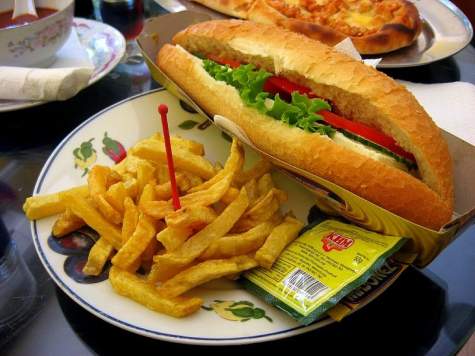
    The first time I went around the corner here to get a sandwich, I tried to get a vegetarian one. I got a sandwich with some cheese. I liked their attitude though (it was very hospitable and accommodating) and told my friend about it and took him there. When I came back I could see in their eyes that they were happy I not only came back a second time, but also brought another new customer to the place. My vegetarian sandwich now contained cheese and tomato.

    Today I went there again and I heard the one guy say in Turkish to the other something along the lines of “look, he’s back again”. It’s nice to be noticed and it’s great to see how much Turkish business owners value returning customers. This time I got the same sandwich but with cucumber and salad. Next time maybe some fries? Another example.

    In Istanbul there are many places to have some tea with friends, smoke some nargile (hookah/seisha), and play some games (mostly backgammon). Last week I already spoke about going to a nargile traditional waterpipe place in Taksim with some friends. We decided to go there again and I think we’ll be having weekly meet-ups at this place once we’re all spread out over town at different universities. Well, so far we already have weekly meet-ups 😉

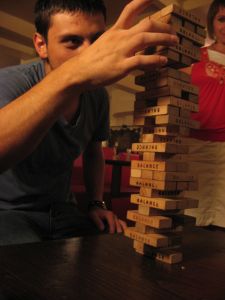
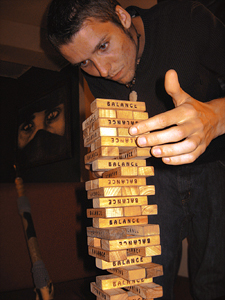
    Anyway, we sat down, drank some tea, ordered a banana flavour nargile which had milk instead of water in it and started playing backgammon. After one game, we put back the board and brought out Balance, probably known as Jenga to most Westerners. We played a few games, but the concentration and energy that goes into this game is magnetic and we soon had the attention of the staff. We invited them to come play and had a lot of fun with them. Great!

    It’s important here to form a bond with people. Not just for the free tea, nargile, or having many friends, but for the simple fact that the customer / staff relationship is rather different from in Holland. In one way you are treated with more respect and more formality, in the other way more personal. Maybe because of the more personal touch there is more respect between staff and customer. People don’t just see each other as their roles (there are exceptions of course) or as numbers, but as actual people and treat you as such.

    Except for in Turkey’s mobile phone network provider Türkcell’s shops where they treat you like someone who doesn’t mind having to “come back tomorrow” for seven days per week to avoid getting cut off from the network. Big thumbs down to Türkcell and how their staff treats foreigners. (Just wanted to vent)

    Like to read more about Turkey, Istanbul and my experiences in the region? Subscribe by RSS or click here for email updates.

  • Black Sea Coast: Nesebar

    As we got to Nesebar, we were a bit confused where to go. Everyone got off the bus at the beginning of the town, so we did the same, but we didn’t have a clue where the centre of the town was. Immediately an old woman comes up to offer a place to sleep and we take it.

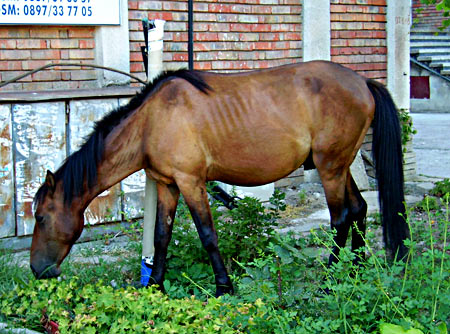
    A few hours later we’re ready to go and explore Nesebar. As we head out, one of the first things we come across is… a horse.

    Hooray for Bulgaria. Anyway, we continued down the streets of the new town towards the old town. Once you get close to the old town, you’ll start seeing an increasing number of tourists, tourbuses coming for day trips, boats and harbours… and sea!

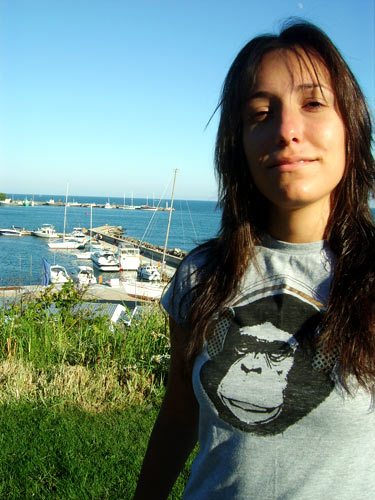
    Tsvety at the harbour

    To get to the old town you have to walk over this dam built in the water. I suppose Nesebar used to be an island. It has 3 millenia of history behind it, which is slightly noticeable because of old ruins, but recently tourism has been on the rise and with the growth of the beach resort Sunny Beach (Slanchev Bryag), Nesebar seems to be getting swallowed by tourists. Not really my thing, I prefer to explore a bit myself. Therefore for food and shopping, I found it better to get out of the old town and into the new town, which was slightly more Bulgarian.

    Since we were told there are no good clubs in Nesebar, we went for a night out to Sunny Beach and see what all the fuzz is about… See if it’s really a unique place in Bulgaria. And it was…

    It’s not Bulgaria. If you want to see Bulgaria, don’t go to Sunny Beach. If you’ve been to Sunny Beach, don’t tell people you’ve been to Bulgaria; you haven’t. You’ve been to Sunny Beach, which is interchangeable with any extremely touristy and club-filled town at the Spanish coast.

    Having said that, it’s an interesting place of modern architecture. Wealthy Bulgarians (some of them undoubtedly involved in the mafia) build huge palaces in honour of… err.. themselves probably. These palaces are beautiful and it’s no wonder so many tourists are willing to pay big bucks to sleep in Bulgarian mafiosi’s penis extensions.

    The clubs… they’re decent. At most. The first we went to was called Lazur… and it was like high school, but with a LOT of alcohol. Kids dancing like it’s the first time they’re in a club, etc. We left soon and found a slightly better club where a waitress tried to rip me off, so I’m not even going to mention the name of the club. Actually, I will… Don’t go to Mania.

    We got a taxi back which was 30 leva (15 euros), but because of my girlfriend, who’s Bulgarian, we only paid 15 leva (7.50 euros). Pretty expensive for a 5 minute ride, especially in Bulgaria, but oh, I forgot… Sunny Beach is NOT Bulgaria.

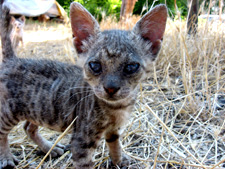
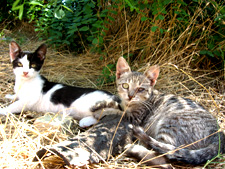
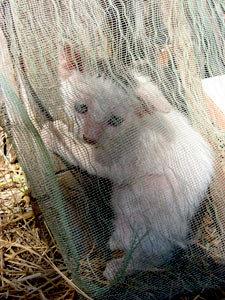
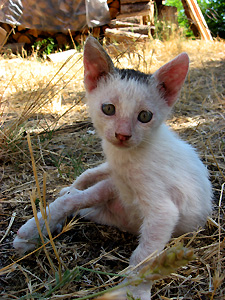
    At the place we were sleeping, we discovered some kittens the next day and took some shots of them. They seemed to be rather sick though, so we kept a little distance. The pictures worked out well though. Click to enlarge.

    Click here to see the whole Nesebar album…

    After Nesebar, which is definitely a place to have seen in Bulgaria, we went to Sofia, where Tsvety did her things and I did mine for a few days. Then we both got on a plane and went to Holland. Time to show Tsvety where I’m from.

    If you wish to stay up to date about my travels, you can subscribe by RSS or email.

Related Posts Widget for Blogs by LinkWithin